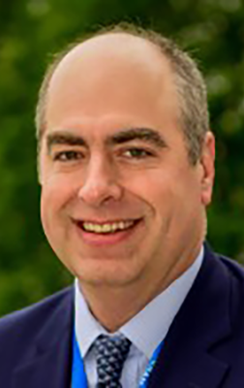
Dr. Sauer joined the faculty at Harvard Medical School as Section Chief of the Cardiac Arrhythmia Service within the Division of Cardiovascular Medicine at Brigham and Women’s Hospital (BWH) in 2019. Prior to this, he earned a reputation for excellence in clinical innovation and program building at the University of Colorado, where he created an active clinical service at the University of Colorado Hospital and developed the clinical programs at Denver Health Medical Center, the Denver Veterans Administration Medical Center, and other outreach practice sites.
While most of his time and effort has been in the clinical and administrative arenas, he has remained committed to research and discovery. With regard to clinical innovation, there are new research programs that he has established in ablation biophysics, pre-clinical models of electroporation as an ablative energy source, integration of imaging in ablation planning, and arrhythmia care redesign using scripted algorithms and virtual visits with non-physician coordinators. Although all of his research interests are centered on clinical innovation, he have received training and gained experience in a wide array of research methods, including those used in molecular genetics, observational clinical research, clinical trials, outcomes assessment, computational science, and engineering experimentation.
Since Dr. Sauer’s specialization is in cardiology and cardiac electrophysiology, he has focused his research and scholarship on the diagnosis and treatment of cardiac arrhythmias. He has had the privilege of collaborating with colleagues on a number of research studies ranging from pharmacogenetics to multicenter ablation outcomes trials. In his leadership role as section chief at BWH, he has had the opportunity to serve as a mentor for motivated fellows and junior faculty with overlapping interests that touch upon the various themes involved in the management of cardiac arrhythmia patients.
His professional career has focused on all aspects of arrhythmia management including administrative, educational, research, and clinical components. For each of these facets, his goals remain improved patient outcomes, the generation of new knowledge, and the dissemination of this work through the academic mission.