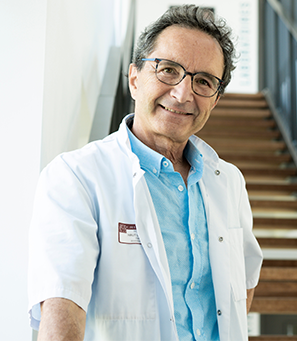



Few electrophysiologists have shaped the field as deeply or as repeatedly as Professor Michel Haïssaguerre. Best known for the seminal discovery that pulmonary vein triggers initiate atrial fibrillation, a finding that transformed AF from a largely medical disease into an ablation target, his contribution extends far beyond a single landmark observation.
Across his career, Professor Haïssaguerre has been at the forefront of the ideas, techniques and technologies that now define daily electrophysiology practice. His work helped establish curative catheter ablation for AVNRT and AVRT, advanced the mechanistic understanding and ablation of ventricular fibrillation, and the recognition of early repolarisation syndromes. He has also been closely linked to the development and clinical adoption of tools that changed how electrophysiologists see and treat arrhythmias, including circular pulmonary vein mapping, and multipolar mapping technologies such as the PentaRay catheter. More recently focused on non-invasive mapping to improve our understanding of arrhythmia mechanisms.
In this main tent conversation, Professor Haïssaguerre joins Professor Prashanthan Sanders to reflect on a career defined by clinical observation, scientific courage and technological innovation. The discussion will trace how disruptive ideas move from the laboratory and catheterisation laboratory into global standards of care: from the early days of supraventricular tachycardia ablation, through the pulmonary vein discovery in AF, to ventricular fibrillation mapping, inherited arrhythmia syndromes, and the next frontiers in ablation science.
This session offers attendees a rare opportunity to hear from one of the defining innovators of modern electrophysiology, not only about the discoveries that changed the field, but about the mindset required to make them.